
When Everything Feels Chaotic, Clarity Becomes Your Greatest Leadership Responsibility

Leadership has never been noisier.
Every day we're surrounded by more information, more opinions, more strategies, and more advice than ever before.
Yet despite having access to endless information, many leaders still struggle to make clear decisions.
Why?
Because information isn't the same as clarity.
During my conversation with former Marine and leadership consultant Fred Smith, one idea stood out above everything else.
He described confusion as something that's created, distributed, and consumed, and the more I reflected on that idea, the more I realised how relevant it is for every leader today.
Whether you're leading a business, a team, or your own life, clarity isn't simply a communication skill.
It's a leadership responsibility.
Clarity Begins Long Before You Speak
Many people assume communication starts the moment we open our mouths.
It doesn't.
Communication begins with the conversations we're having with ourselves.
If we're unclear about what we believe, what matters most, or where we're heading, that uncertainty inevitably shows up in our decisions.
It spreads to our teams.
It slows progress.
It creates hesitation.
Fred shared something that I think every leader needs to hear:
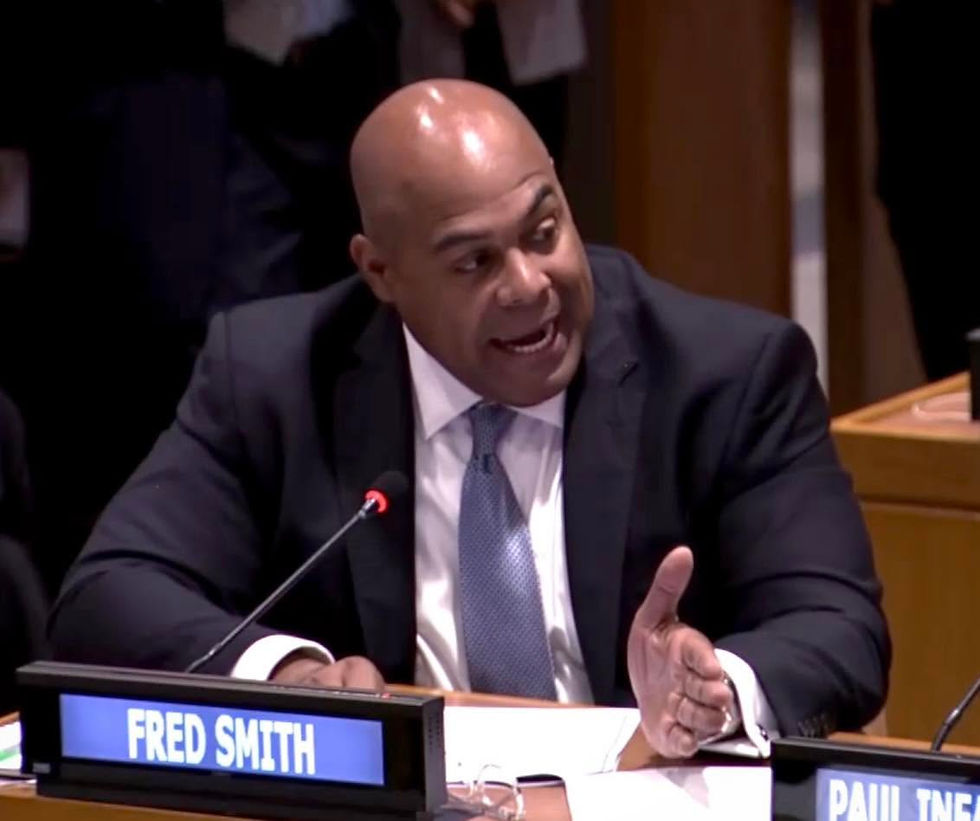
Confusion doesn't just happen.
It grows when leaders avoid difficult decisions, send mixed messages, or haven't taken the time to become clear themselves.
Responsibility Comes Before Confidence
One of the things that struck me most about Fred's story wasn't the medal he received or the environments he worked in.
It was his relationship with responsibility.
Throughout his military career, he was repeatedly trusted with responsibilities that exceeded his formal rank because people believed he could be relied upon under pressure.
That raises an interesting question for all of us.
What creates that kind of trust?
Many people believe confidence comes first.
But in my experience, it's usually the opposite.
Confidence grows when we repeatedly choose responsibility.
Every decision we take.
Every difficult conversation we have.
Every commitment we honour.
Those moments shape the leader we become.
The Real Battle Isn't Around You

One of my favourite moments in our conversation came when we explored what clarity really is.
Fred made a simple observation.
The biggest communication problem isn't our audience.
It's ourselves.
If we don't understand who we are...
If we don't know what we stand for...
If we haven't taken responsibility for the outcomes we want...
Then no amount of better communication will solve the problem.
Because leadership always flows from identity.
That's why clarity isn't something we find.
It's something we build.
Why Identity Creates Clarity
Within the Identity Architect Method™, I often talk about the importance of separating who you are from what you do.
When our identity becomes attached to our title, our achievements, or our role, every decision feels heavier.
We begin protecting the identity we've built instead of leading from the person we're becoming.
Clarity becomes difficult because we're trying to preserve certainty instead of pursuing truth.
Real leadership asks a different question.
Not...
"How do I look like a leader?"
But...
"Who do I need to become to lead well?"
That's an identity question.
And identity always shapes leadership.
The Identity Architect Method™ Reflection
If leadership feels heavier than it should right now, pause for a moment and ask yourself:
Where am I creating unnecessary complexity instead of clarity?
What decision have I been avoiding because it requires responsibility?
Am I seeking more information when what I really need is more honesty?
If my team mirrored my level of clarity today, what would they become?
What would change if I stopped waiting to feel confident and started taking responsibility?
Leadership rarely becomes clearer because circumstances improve.
It becomes clearer because we do.
Final Thoughts
One of the things I appreciated most about my conversation with Fred wasn't his military experience.
It was his reminder that clarity isn't something we're given.
It's something we choose.
Every day, leaders have the opportunity to reduce noise instead of adding to it.
To simplify instead of complicate.
To create certainty instead of confusion.
Because people don't follow leaders who know everything.
They follow leaders who know what matters.
And perhaps that's the greatest lesson of all.
When we take responsibility for our thinking, our communication, and our identity, clarity follows.
Continue the Conversation
If this conversation challenged the way you think about leadership, I'd encourage you to pause before searching for another strategy or framework.
Instead, ask yourself:
Where in my life do I need greater clarity?
Because leadership isn't defined by how much information you have.
It's defined by how clearly you can see what matters, and help others see it too.
If you'd like to explore more conversations about identity, leadership, and personal transformation, listen to more episodes of What I Wish I Knew at 30.
And if you're ready to move beyond insight and intentionally design the next chapter of your life, explore the "The Identity Architect Method™ ", where lasting transformation begins with identity, not achievement.


Comments